
New Zealand has never been a country that does things the conventional way. You can see it in the landscape — a country that’s simultaneously volcanic and glacial, tropical and alpine, ancient and geologically brand new. So maybe it’s no surprise that the accommodation scene follows the same logic. While the rest of the world offers you a bed, a pillow, and a breakfast buffet, New Zealand quietly went ahead and built hotels inside warplanes, grain silos, and storybook boots.
Most travel blogs round up these stays in a listicle with a single sentence each and call it done. This article goes deeper — into the actual stories behind the most unusual places to sleep in Aotearoa, why they exist, and what makes each one genuinely worth the detour.
Woodlyn Park, Waitomo — Where History Becomes a Bedroom
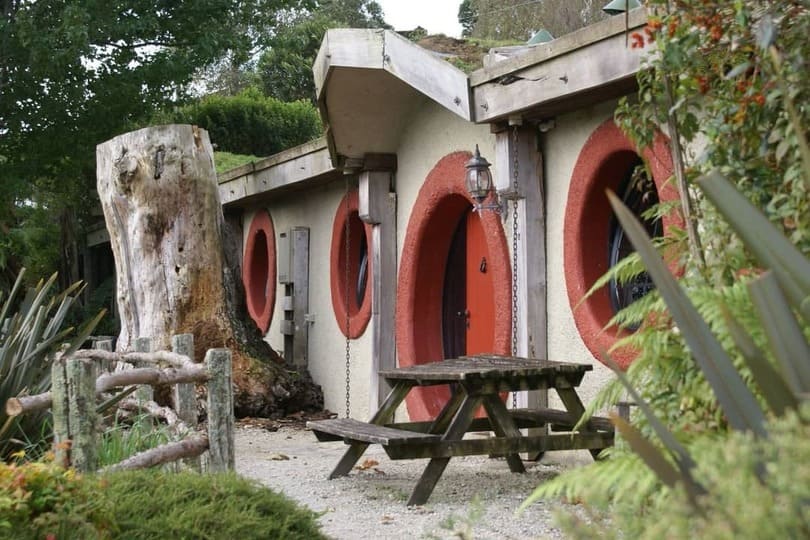
If you had to pick one property that best captures New Zealand’s eccentric spirit, Woodlyn Park would be a very strong candidate. Located two minutes from the Waitomo Glowworm Caves in the Waikato region, it has been listed among the top 10 most unique tourism accommodations in the world.
The property is the creation of Billy Black — described in one review as a world record-breaking sheep shearer who travels around the country with a motorbike-riding pig. The motel units are built in part from recycled and natural materials, having in the past worked hard as a war plane, a navy patrol boat, and a carriage from the steam train era. The result is an accommodation complex where every room has a previous life more interesting than most people’s entire itineraries.
The Plane is the showpiece. It’s a 1950s Bristol Freighter fully refurbished into two beautiful self-contained motel units, and was reportedly one of the last Allied planes out of Vietnam — possibly the only accommodation of its type in the world. The cockpit unit is particularly popular — guests can sit in the original pilot seats, with one bed located directly inside the cockpit. A reviewer from International Traveller put it perfectly: they walked in as a cynic and walked out “having regressed to childhood excitability.”
The Boat carries genuine historical weight. The WWII patrol boat was originally a Fairmile Ship built in 1942, used for anti-submarine patrol in the islands during WWII. Of the twelve that were built for New Zealand’s wartime service, only a couple survived — including this one, now renamed The Waitanic. You can sleep in what is essentially a piece of New Zealand military history, which is not something most hotels can offer.
The Train is a 1950s rail carriage, and there’s also a former Waiheke Island ferry among the options a vessel most Aucklanders would have crossed the harbour on at some point, now permanently docked in a Waikato paddock.
Then there are the Hobbit Houses. Created two years after the final Lord of the Rings film was released, these two motels are bermed beneath a hill where sheep and a donkey wander for grazing. Each unit sleeps up to six people, with custom designed furniture and décor, built from polystyrene blocks that provide added warmth in winter and cooling in summer.
What nobody mentions often enough is the honest disclaimer Woodlyn Park puts on its own website: the units have a slightly lingering aroma from their industrial past, much like any modern vehicle. That kind of transparency is refreshing, and it tells you something about what kind of place this is — one that values the experience over pretence.
SiloStay, Little River — Sleeping Inside an Idea That Shouldn’t Work
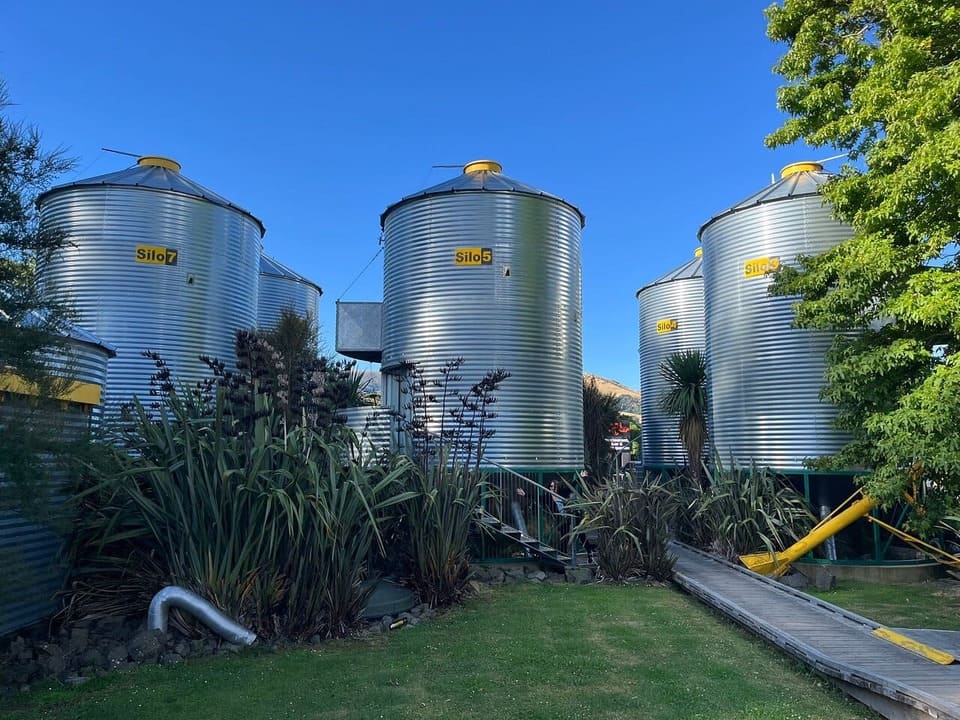
About 50 minutes from Christchurch, on the road to Akaroa and the Banks Peninsula, nine corrugated steel cylinders rise out of the countryside like something between a farm and a fever dream. This is SiloStay — and it is, genuinely, one of a kind.
Stuart Wright-Stow pondered the intricacies and challenges of the circular shape and realised his dream to build SiloStay — an innovative, eco-friendly and exciting accommodation experience. He embarked on this adventure just prior to February 2011, when life in Christchurch was somewhat shaken and forever changed by the earthquakes. Building something new and creative in the rubble of a post-earthquake city is either terrible timing or the best possible statement. Stuart chose to see it as the latter.
SiloStay has eight single units each sleeping two people, plus an accessible family unit. The complex is powered by a gravity-fed wood pellet boiler housed in its own custom designed silo with glazed panels, so you can watch the energy being generated. The eco-credentials are woven into the architecture rather than bolted on as an afterthought.
Inside, everything moulds to the curves with clever industrial design across two stories. A steel staircase connects the kitchenette, eating area, and toilet downstairs with the bedroom and bathroom upstairs. The natural instinct when you hear “converted grain silo” is to imagine something spartan and cold. The reality is the opposite. The silos are filled with bright blues, greens, oranges and reds. Funky colours that turn your head and put a smile on your face.
The detail that gets people most excited is the ceiling. The upper level includes a balcony, but the quirky appeal lies in the ceiling ‘hatch’ which lifts off to reveal a view of the sky — lie in bed gazing at stars or, if you catch the weather right, watch raindrops or snowflakes settle on the glass above. A skylight built into the peak of a grain silo, framing whatever the Canterbury sky happens to be doing that night. That’s the kind of detail that justifies the trip entirely.
SiloStay is adjacent to the Christchurch–Little River Rail Trail, a 44-kilometre cycling and walking track that follows the original railway line from Christchurch to Little River. Bikes are available locally, the café is within walking distance, and the wider Banks Peninsula — with its French-settled town of Akaroa, Hectors dolphins, and penguin colonies — is within easy reach.
One visitor review, cited across multiple platforms, captures the experience perfectly: a guest who admitted her family laughed when they first saw what their mum had booked, then walked inside and felt “immediate comfort.” That gap between expectation and reality is the whole point.
The Boot, Tasman — A Fairytale With a Juliet Balcony
On the Tasman coast of the South Island’s northern tip, surrounded by vineyards, national parks, and the approach to Abel Tasman, there is a building shaped exactly like a boot. Not metaphorically. Literally a boot. With laces.
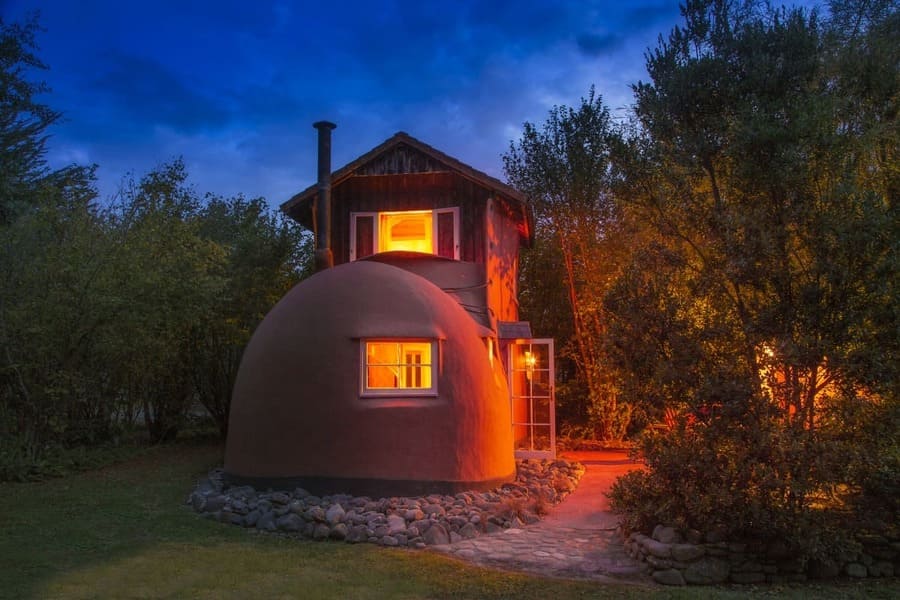
The Boot is a wonderfully imaginative, superbly crazy hideaway for two on the Tasman coast, found at the northern point of the South Island. Expertly crafted to look like a boot, this creative piece of architecture has seemingly sprung from the pages of a storybook — surrounded by a pebble rockery and sheltered by lush trees, it comes complete with laces, a front door, windows and luxury aplenty.
Inside, the experience is considerably more refined than the exterior might suggest. The tiled bathroom is equipped with toiletries, towels, a hairdryer and a shower built for two. A spiral staircase leads to the bedroom with a queen-sized bed, dark curtains for late morning rises, and a Juliet balcony with views into the courtyard and across the pond.
The Boot is part of the Jester House Estate, a 2.6-hectare wonderland established in 1991 that also houses a café specialising in food made from the abundant fresh and organic produce of the Nelson region. Both the house and the café are designed as sustainable eco-buildings using timber beams and earth from the property itself, creating a distinctive modern medieval style.
What makes The Boot different from pure novelty accommodation is the surrounding environment. The courtyard is a sheltered outdoor space surrounded by a fragrant garden, perfect for alfresco dining by the fire, and fine Nelson art, fresh flowers, fruit, and no television combine to create a genuinely romantic atmosphere. Between May and September, you can also feed the tame eels that live in the nearby creek — an experience that is quintessentially, irreducibly New Zealand.
The location adds significant value. The Boot is situated about 30 minutes from the Abel Tasman National Park, Kahurangi National Park and Nelson city — which means your base for exploring one of New Zealand’s most beautiful coastal regions happens to be a luxury boot.
Underhill Valley, Waikato — The Hobbit Hole That Couples Actually Want
While Woodlyn Park’s Hobbit Houses cater to families and Lord of the Rings fans of all ages, Underhill Valley takes the same Middle-earth inspiration and applies it with a very different intention.
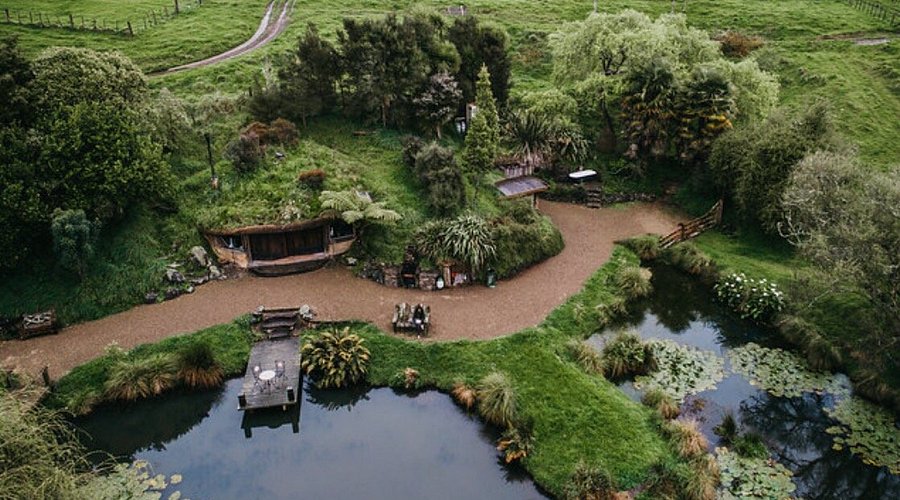
Built into the hillside, this hobbit-style house has been beautifully hand crafted with rustic native timbers and ironwork to create a sustainable and authentic space. Created over 15 years ago, Underhill remained a closely guarded family secret for years. The accommodation is the perfect romantic glamping retreat for couples, with huge timber doors opening wide to overlook a picturesque pond and farmland beyond.
Every last detail has been thoughtfully designed and lovingly handcrafted by the farm’s owners. From the elaborate stonework to the handcrafted iron fittings, the heavy timber doors to the dozens of flickering candles, stepping inside feels like being transported to the Medieval era — or perhaps to the Shire itself.
The old coal range in the kitchen is fully functional. Hosts can provide all the fresh and semi-prepared ingredients for guests to cook a delicious meal using the coal range and wood-fired BBQ, including specialty bread, dips, salads, meats and dessert. Dinner in a hobbit hole, cooked on a wood-fired range, by candlelight. This is the version of unusual accommodation that doesn’t make any concessions on comfort.
Underhill is open year-round and accommodates a maximum of two people. It sits in the Waikato district, around 45 minutes from the actual Hobbiton Movie Set, which makes for a logical combination: tour the real film location in the morning, and sleep in a hand-built version of it at night.
For thrill-seekers, The Most Haunted Places in New Zealand — Ghost Stories & Legends adds a spooky twist to your trip.
Why New Zealand Keeps Building These Places
Reading through the competitor content on this topic, a pattern emerges: most articles treat unusual accommodation as a quirk — something amusing to mention before moving on. What they miss is the underlying thread connecting all of these places.
Every property above was built by an individual with a specific vision who ignored conventional business logic to pursue it. Stuart Landsborough at Puzzling World selling his house to build a maze. Stuart Wright-Stow designing silo apartments in post-earthquake Christchurch. Billy Black converting a warplane into a bedroom on a sheep farm. The Underhill hosts spending years handcrafting an underground home that could only ever accommodate two guests at a time.
New Zealand’s small population, relatively low land costs, and culture of individual enterprise create the conditions for this kind of thing to happen. What would be a regulatory nightmare elsewhere becomes a working guesthouse. What would be dismissed as impractical somewhere else becomes a nationally recognised attraction.
The result is a country where the accommodation is sometimes as memorable as the landscape. That’s not true many places in the world. In New Zealand, it consistently is. Enhance your journey with ideas from Road Trips Off The Beaten Track: Curiosities by the Road to combine unique stays with scenic adventures.