
Every country has big museums. Halls with high ceilings, gift shops, audio guides, café on the ground floor. New Zealand has those too — and some of them are genuinely excellent. But the country also has something harder to find in a guidebook: a sprawling, largely self-organised network of micro-attractions, community libraries in old fridges, specialist museums in small towns, and spaces where passion for a very specific subject has been compressed into a very small building.
Most travel content skips straight to the national institutions. This article goes the other direction — into the smaller rooms, the stranger collections, and the places where one person’s obsessive interest in a single subject turns out to be worth a three-hour detour.
Explore more unusual attractions by visiting Puzzling World — Inside NZ’s Optical Illusion Wonderland for mind-bending fun.
The Book Fridge — Christchurch’s Most Unexpected Library
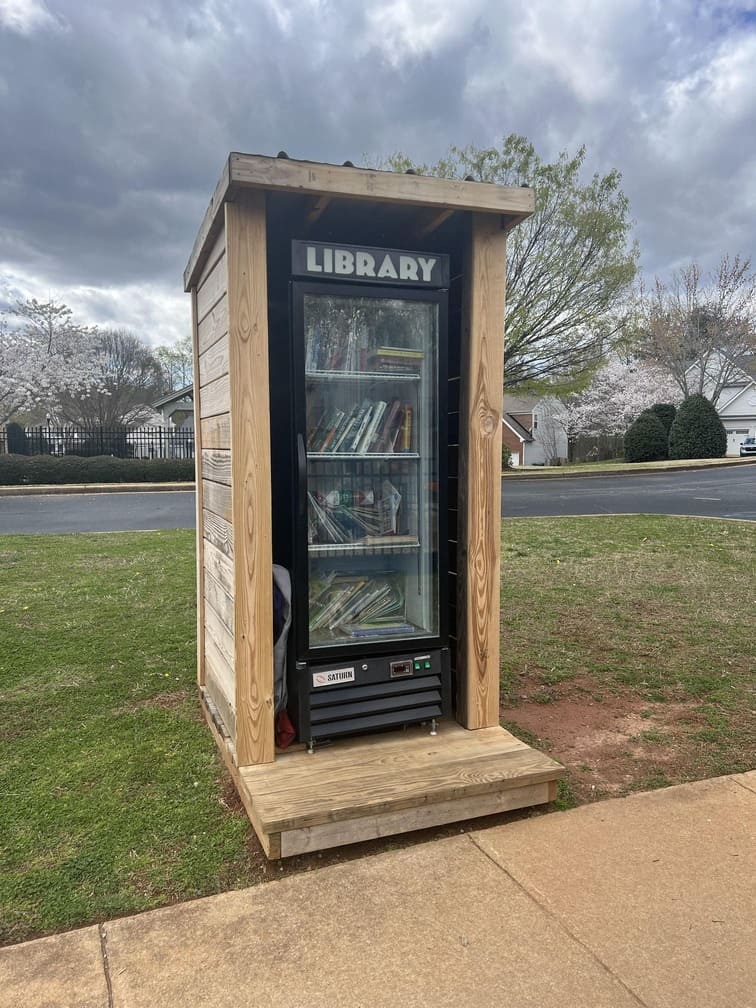
In July 2011, five months after the second major Christchurch earthquake, a catering fridge appeared on the corner of Kilmore and Barbadoes Streets in the city centre. It was full of books. It was open 24 hours a day, free to use, and it had no formal operating hours, no staff, and no membership requirements. You took a book. You left a book. That was the entire system.
The Think Differently Book Exchange was suggested by librarian Sarah Gallagher in winter of 2011 in response to the lack of a central city library due to the earthquakes. Together with Sarah, Gap Filler worked to develop the concept, locate a site and realise the project.
Gap Filler was a creative urbanism organisation that had formed specifically to respond to the earthquake — placing temporary, imaginative projects into the vacant lots left by demolished buildings. The catering fridge was chosen as the receptacle for books because it was large, had shelves, and was waterproof. The name “Think Differently” came from the idea that books donated should be ones that had changed the way a reader saw something.
The project was originally planned as a three-month initiative. It ran for eight years before the land was sold. Gap Filler had initially expected to run around five or six projects total, each occupying a vacant site for a few weeks. After the February quake all of that changed because the need and interest were both much greater.
The book fridge became one of the most visited and written-about symbols of Christchurch’s recovery. Not a government initiative, not a heritage project, not a corporate sponsorship — a librarian’s idea, a catering fridge, and the quiet trust that people would take books without being told to. It was rare to pass by without seeing someone browsing among the volumes, and hearing murmurs of delight as people found a new title or re-discovered an old favourite.
The broader movement it helped inspire is still active today. Dunedin alone has 252 little libraries and counting, with guardians looking after the libraries and people encouraged to “take a book now, leave a book later.” Blenheim, Nelson, Cambridge, Auckland — across the country, old fridges, red telephone boxes, and handbuilt wooden cabinets have become the infrastructure of an entirely volunteer-run reading culture. Auckland has The Book Stop, a not-for-profit that turns old fridges into little libraries, with its first installation at Mt Roskill. None of these cost anything. None of them require a card or a form. They just exist, stocked by whoever passes by, read by whoever needs them.
Steampunk HQ, Ōamaru — Not Quite a Museum, Not Quite a Gallery
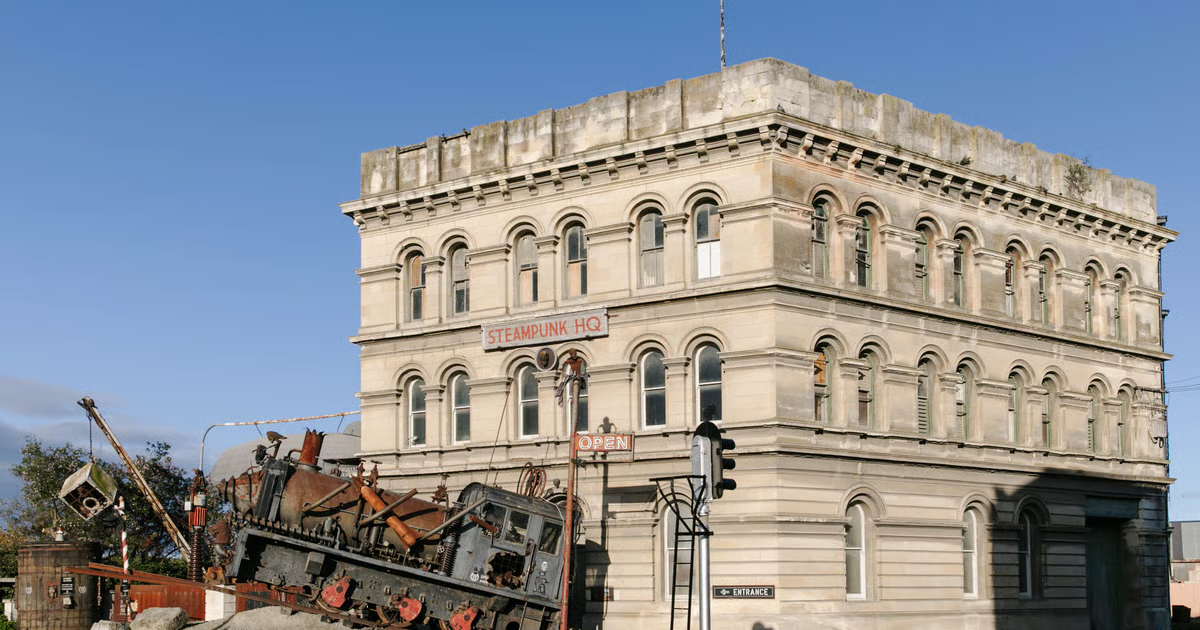
One of the problems with writing about Steampunk HQ is that no category quite fits. Museum is too formal. Gallery is too quiet. Haunted house is closer to the experience but misses the intellectual dimension. The honest answer is that it’s something New Zealand invented, inside a Victorian grain elevator, on a rainy Tuesday in 2011.
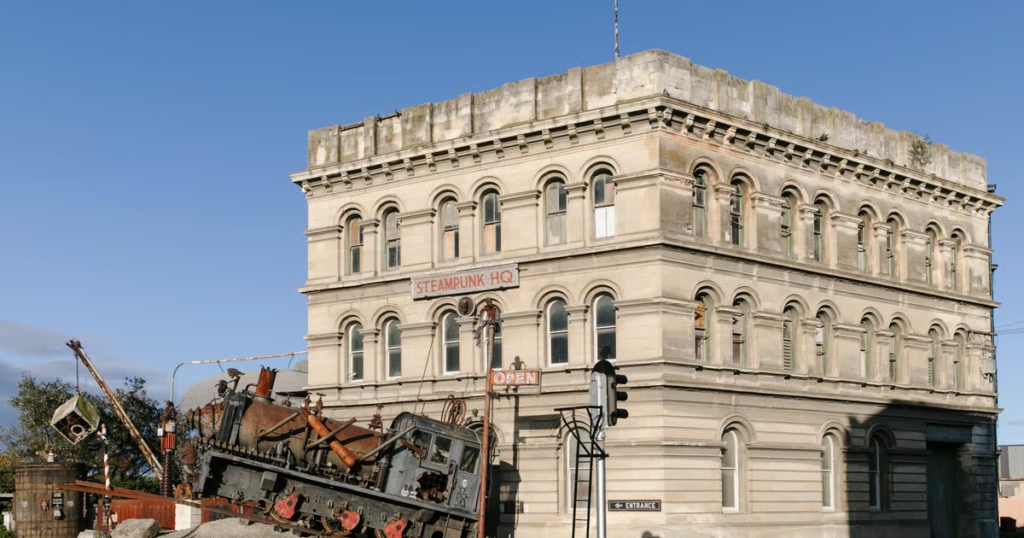
The museum is housed in an impressive grain-storage building built in 1883, when it was the first elevator building to be constructed in the Southern Hemisphere and when Ōamaru was a bigger city than Los Angeles and a thriving port. That historical context matters. The building sat largely dormant for nearly 90 years before anyone thought to fill it with copper contraptions and skeletal sculptures.
Steampunk HQ was founded in 2011 by a group of creative minds — Don Patterson, Jac Grenfell and Brian de Geest — who were passionate about steampunk and showcasing it to the public. In New Zealand, the Steampunk culture started back in 2009 with an art exhibition in the Forrester Gallery in Ōamaru, where several iconic works of art by sculptor Chris Meder caused quite a stir — his recycled relics constructed from scrap metal included a piece called Time Machine.
Outside the free-standing stone building, a coin-operated locomotive greets visitors. This NZR DS class diesel engine has been heavily modified with lights, engine and train whistle sounds, and fire breathing out of its chimney. Drop a two-dollar coin in and watch a modified diesel engine breathe fire in a Victorian port town. The experience sets the tone correctly.
Inside, the ground floor and basement are filled with bizarre machinery and contraptions formed from gears, pipes, gas cylinders and other bits of metal, accompanied by flickering lighting, sound effects and projected film clips. The Portal, a mirror and lighting installation, has been described by visitors as the closest thing to time travel they’ve experienced. The Metagalactic Pipe Organ allows visitors to play sounds that the HQ’s fictional officers allegedly collected on their time jumps through space.
Next door is The Libratory, an extension of Steampunk HQ. It’s a library and art gallery dedicated to the history of steampunk, where artists show their wares and model their designs. The Libratory functions as the quieter half of the operation — a space where the fiction of steampunk is documented and celebrated rather than performed. Together, they make a complete thing: a gallery with its own mythology, its own community, and its own annual festival. In June 2016, Ōamaru entered the Guinness Book of Records for holding the largest gathering of steampunks.
Ōamaru boomed economically during the 1800s, and its buildings serve as the perfect setting for this steampunk playground with bountiful neoclassical and Victorian style architecture. The town didn’t just host a movement — the architecture made it inevitable.
The Kauri Museum, Matakohe — A Forest in a Building
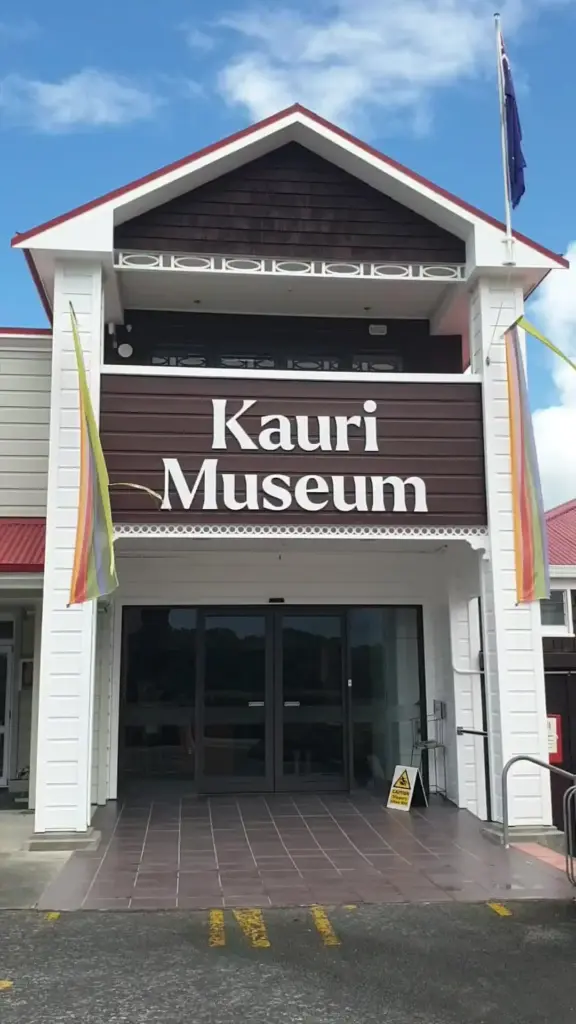
There is a museum in the small Northland village of Matakohe, two hours north of Auckland, that is dedicated entirely to a single species of tree. This sounds like it should be a minor stop on the way somewhere else. It consistently turns out to be one of the most memorable visits on the entire North Island.
The Kauri Museum contains many exhibits that tell the story of the pioneering days when early European settlers in the area extracted kauri timber and kauri gum. The museum has over 4,000 square metres of undercover exhibits, including the largest collection of kauri gum in the world, and the largest collection of kauri furniture.
The kauri tree requires some background for visitors who haven’t encountered it before. The ancestors of the kauri first appeared in the Jurassic period, 190 to 135 million years ago, making the kauri-podocarp forests among the most ancient in the world. Today, the largest living kauri, Tāne Mahuta, is 4.4 metres in diameter and 17.7 metres to the first branch. The oldest tree is estimated to be 3,000 years old.
The museum tells the story of what happened when European settlers encountered these ancient trees and began cutting them down at industrial scale. Kauri wood was used for ship building including masts and spars of sailing ships, houses, furniture, bridges, fences, dams, patterns used for metal casting, railway sleepers, mine-props, and many other purposes. The result was one of the most comprehensive episodes of deforestation in the Southern Hemisphere.
On the wall of the main hall, full-scale circumference outlines of the huge trees are displayed, including one of 8.5 metres — larger even than Tāne Mahuta. Standing next to that outline puts the scale of what was lost into immediate physical perspective. No information panel achieves the same effect.
Thousands of pieces of kauri gum are on display. Kauri gum was initially used by Māori to light fires, to chew, and as a pigment for tattooing. By the mid-1840s the gum was being collected and exported to England and America to be used to make high-quality varnish. The gum collection — amber-coloured, in every size from thumbnail to fist — is one of those museum rooms that people end up spending twice as long in as they planned.
The museum includes a working mock-up of a steam sawmill and a full-scale replica of a 1900s kauri boarding house, fully furnished, with mannequins dressed in period clothing. It’s a complete recreation of a vanished world — built in a village of a few hundred people, visited by thousands annually, and consistently cited as one of the best specialist museums in the entire country.
A Practical Map of NZ’s Micro-Attractions
The places above are the headline acts, but New Zealand’s micro-museum culture runs far deeper than any single article can cover. Here’s a reference list of other genuine gems worth a detour:
- Puhoi Town Library, north of Auckland — originally an office for the Roads Board, it became a library in 1923. In April 1924 a flood washed away most of the books and the library wasn’t re-established for over 50 years. It has a unique claim to fame in that it featured in Stephen King’s 1992 film Tommyknockers as the Christian Science Reading Room.
- The Libratory, Ōamaru — steampunk art library adjacent to HQ, run by the local community, where artists exhibit alongside the history of the movement.
- Gumdiggers Park, Northland — an open-air site where ancient kauri logs have been excavated from swamps where they’ve lain for up to 50,000 years. Not a museum in the traditional sense — more like a geological excavation you can walk through.
- Lilliput Libraries, Dunedin — 252 little libraries and counting across the city, maintained by volunteer guardians under the motto “take a book now, leave a book later.”
- The Escapist Library, Christchurch — one of the smallest libraries in New Zealand, a single cabinet on Hereford Street dedicated entirely to escapist fiction.
- Cambridge Book Exchange, Waikato — a book exchange inside a converted red telephone box on Empire Street, combining two forms of British infrastructure that New Zealand has repurposed with considerable creativity.
Why Small Matters
Reading through what competitors have written about New Zealand travel, the pattern is consistent: big attractions get covered, small ones get a line at best. Steampunk HQ appears on listicles. The Kauri Museum turns up in Northland road trip guides. The book fridge, the Lilliput Libraries, the telephone box in Cambridge — these almost never make it to print.
What all of these places share is that they were built by people with a specific idea and no particular budget. The book fridge started as a librarian’s response to an earthquake. Steampunk HQ started as three people renting a grain elevator and filling it with copper sculptures. The Kauri Museum started as a centennial celebration committee in a village of a few hundred residents that decided in 1961 to build something meaningful.
Size is not the right measure for any of these. The Kauri Museum’s 4,500 square metres makes it the largest undercover attraction north of Auckland — but it still feels like a secret compared to the tourist infrastructure in Queenstown or Rotorua. The book fridge was a single catering appliance that ran for eight years, became a city icon, and inspired a national culture of community book sharing.
The logic of New Zealand’s micro-attractions is the same logic that runs through everything else distinctive about the country: one person, one idea, and a willingness to build it anyway. The result, scattered across both islands from Northland to Southland, is a parallel travel itinerary that most visitors never find — and that those who do remember longer than almost anything else.